



In-depth Analysis of Permanent Magnet Lifters, Lifting Electromagnets, and Electro-Permanent Grippers: A Comprehensive Comparison of Principles, Advantages & Disadvantages, and Application Scenarios
Data Source:
Author:
Publish Time:
2025.07.24
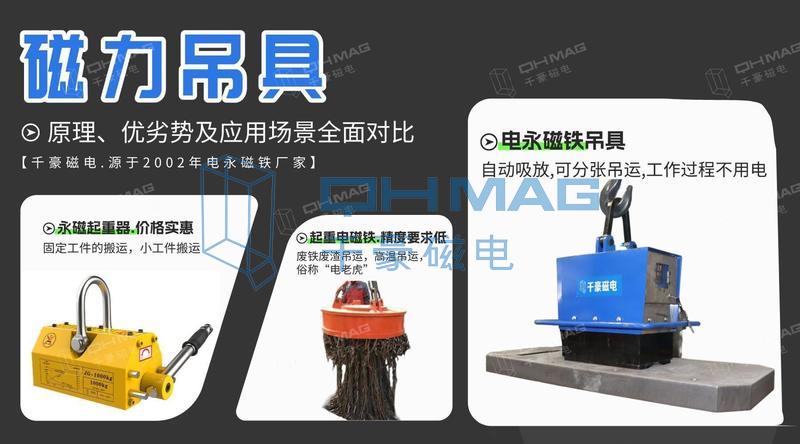
In the field of industrial lifting, magnetic lifting devices have become the mainstream choice due to their efficient and safe features. Among them, permanent magnet lifters, lifting electromagnets, and electro-permanent lifting devices stand out as the three core product categories, each with distinct technical principles, performance characteristics, and application scenarios.
This article will provide a comprehensive analysis, covering everything from technical principles and a comparison of advantages and disadvantages to real-world application scenarios. It will also highlight the widespread use of Qianhao’s electric permanent magnet lifting devices in large-scale lifting operations at steel plants, shipyards, and steel trading logistics parks, among other key settings.
In-depth Analysis of Technical Principles
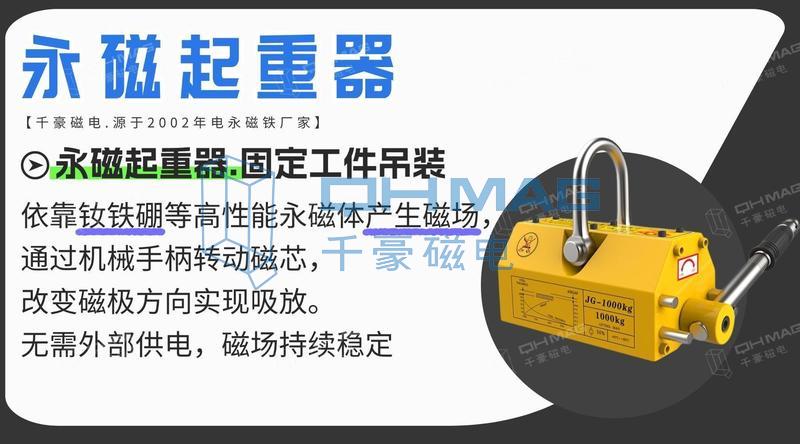
1. Permanent Magnet Lifter: The purely mechanical permanent magnet-driven lifter uses neodymium-iron-boron (NdFeB) permanent magnets as its core magnetic source. By manually rotating a wrench, the direction of the magnetic circuit can be altered, enabling magnetization and demagnetization. Its operating principle is similar to that of traditional magnets—producing a consistent magnetic force without the need for electricity—but it requires manual operation and does not allow for adjustable magnetic strength. Due to the physical limitations of permanent magnet materials, these products are challenging to design in large sizes; typically, their maximum lifting capacity does not exceed 5 tons.
2. Lifting Electromagnet: A power-sustained dynamic magnetic-field lifting electromagnet generates a magnetic field via an energized coil, requiring continuous power supply to maintain its magnetic force. When current flows through the coil, the iron core becomes magnetized, creating a strong magnetic field that attracts workpieces; however, once the power is cut off, the magnetic force instantly vanishes. This technology relies on an external power source and carries the risk of losing magnetism during a power failure, so it must be equipped with a backup battery system to ensure operational safety.
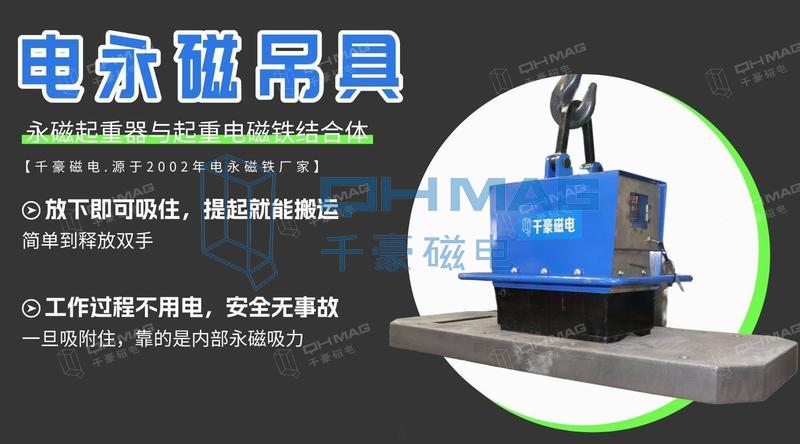
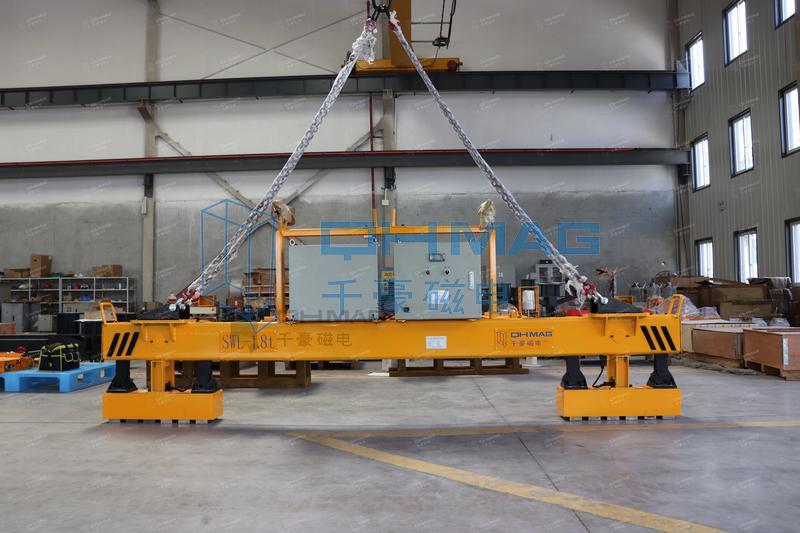
3. Electro-permanent Lifting Magnets: Combining the intelligence of permanent magnets with electromagnetism, these innovative electro-permanent lifting magnets utilize a groundbreaking "permanent magnetic force in operation + electric pulse control" technology. Internally, they integrate high-performance permanent magnets and excitation coils. By applying an instantaneous forward pulse, the permanent magnetic force is activated to securely attract workpieces; reversing the pulse causes the magnetic field to collapse internally, effectively demagnetizing the system. This technology consumes power only during the brief moments of magnetization and demagnetization—typically around 1 second—while requiring no continuous power supply during operation, resulting in energy savings exceeding 90%.
Strengths and Weaknesses Comparative Analysis
| Product Category |
Core Advantages |
Main limitations |
| Permanent Magnet Lifter |
No electricity required, simple maintenance, and high safety factor (retains magnetism even during power outages) |
Manual operation involves high labor intensity, the magnetic force is not adjustable, and it cannot handle large-tonnage lifting tasks. |
| Lifting Electromagnet |
Magnetic force is adjustable and adaptable to complex operating conditions (such as high-temperature environments up to 650°C). |
Continuous power consumption, high risk of power outages, and high maintenance costs (requiring regular coil replacements). |
| Electro-permanent lifting magnet |
95%+ energy savings, power-off magnetic retention, and convenient operation (with remote control support) |
The cost is higher than that of electromagnetic and permanent magnet lifters. |
Precise matching of application scenarios
1. Permanent Magnet Lifter: Miniaturized, Fixed-Scene Application
Typical applications: Small mold handling in machining workshops, sorting of thin plates thicker than 3mm, and short-distance transportation of steel structural components.
Limitations: It cannot handle conditions where the air gap exceeds 2 mm, and the magnetic force will decrease due to demagnetization effects after repeated lifting operations.
2. Lifting Electromagnet: Heavy-Duty Scrap Steel Handling in High-Temperature Environments
Core scenarios: Grabbing mixed materials at a scrap steel recycling yard, and handling high-temperature steel billets at a steel plant (up to 650°C).
3. Electromagnetic Lifting Devices: The Optimal Solution for Large-Scale and High-Frequency Lifting Operations
Steel Industry: Wugang has adopted the Qianhao QLGA-1000101-S electric permanent magnet lifter, enabling 20-ton steel coils to be "adsorbed in 3 seconds + released in 3 seconds." As a result, the single-shift throughput has increased from 80 coils to 150 coils, doubling efficiency. Additionally, its smart sensors automatically adjust magnetic force to accommodate steel coils of varying specifications.
Shipbuilding: Hengli Shipbuilding has introduced a 30-ton electric permanent magnet lifting device, effectively addressing the issue of stress concentration during ship section lifting while achieving energy savings of up to 95%. Leveraging military-grade sealing technology, this innovation ensures stable operation for over 10 years, even in high-humidity and salt-spray environments.
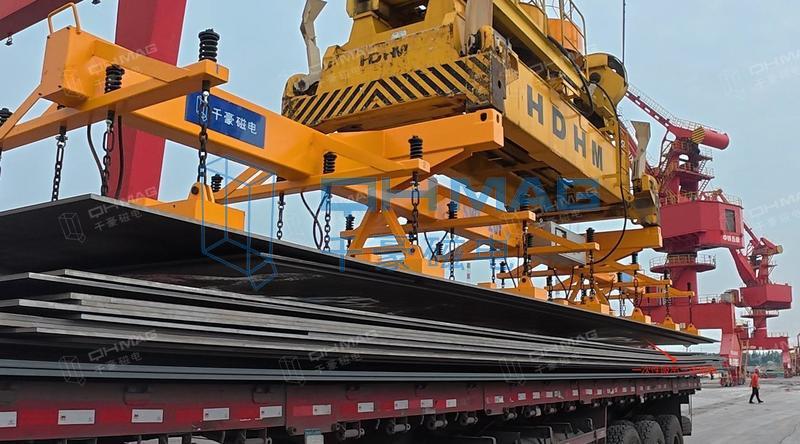
Steel Trading Logistics: A certain steel trading logistics park has implemented Qianhao’s multi-crane lifting solution, enabling it to lift six 6mm steel plates in a single operation. Paired with an intelligent crane system, this setup achieves fully automated handling, reducing cargo damage rates from 3% down to a mere 0.1%. IV. The Industry-Leading Value of Qianhao’s Electric Permanent Magnet Lifting Devices As a domestic leader in electric permanent magnet technology, Qianhao Magnetic Electric’s products have established significant technological barriers:
1. Patent-protected magnetic circuit design: Utilizing a dual-magnetic-circuit structure featuring "reversible magnetic steel plus fixed permanent magnets," this design enables precise magnetic force control. Though frequently imitated by industry peers, it remains unmatched in performance.
2. Intelligent Safety System: Integrates features such as overload protection and demagnetization confirmation feedback, delivering dual-layered safety assurance—“no loss of magnetism even in the event of a power failure”—in scenarios like those at Wuhan Iron & Steel.
3. A Model of Green Energy Efficiency: Compared to traditional electromagnetic lifting devices, Qianhao products can save over 300,000 yuan in electricity costs annually for a single production line, perfectly aligning with the nation’s “Dual Carbon” strategy. Currently, Qianhao’s electric permanent magnet lifting devices have already received certification as Hunan Province’s first (set) major technical equipment, and are now fully integrated into the automated processes of leading enterprises such as Sany Heavy Industry’s Lighthouse Factory. Thanks to their military-grade sealing technology and IP67 protection rating, these devices maintain an impressive 99.9% equipment integrity rate even in harsh environments like ships and ports.
Selection Recommendations and Industry Trends
1. Small-tonnage fixed applications: Prioritize the use of permanent magnet lifters, such as the German FLAIG FX-P series, balancing cost and safety effectively.
2. High-Temperature/Complex Operating Conditions: Lifting electromagnets remain the only viable option, but they must be paired with a backup power system.
3. Large-scale, high-frequency lifting: Thanks to their comprehensive advantages in energy efficiency, safety, and intelligence, electro-permanent lifting devices have become the preferred choice for upgrading industries such as steel and shipbuilding.
According to industry forecasts, the market share of electric permanent magnet lifting devices will surpass 40% by 2025. As smart manufacturing continues to advance, electric permanent magnet lifting tools are increasingly integrating deeply with AI vision and IoT technologies. Qianhao Magnetic Electric’s “Electric Permanent Magnet + Intelligent Crane” solution has already achieved millimeter-level precision, with steel coil handling errors as low as or below 2mm—marking the entry of the lifting industry into a new era of "unmanned and intelligent" operations.
Recommended News
Share


Contact Us
Hunan Yueyang Liandong U Valley Industrial Park

WeChat Official Account
Friendly Links:
Copyright © Hunan Qianhao Electrical And Mechanical Technology Co., Ltd.
This site supports IPv4 IPv6 .