



Unveiling the Principles Behind Three Types of Magnetic Lifters! How Do They All Work? (Qianhao News)
Data Source:
Author:
Publish Time:
2025.07.23
I. A Simple and Straightforward Overview of the Working Principle:
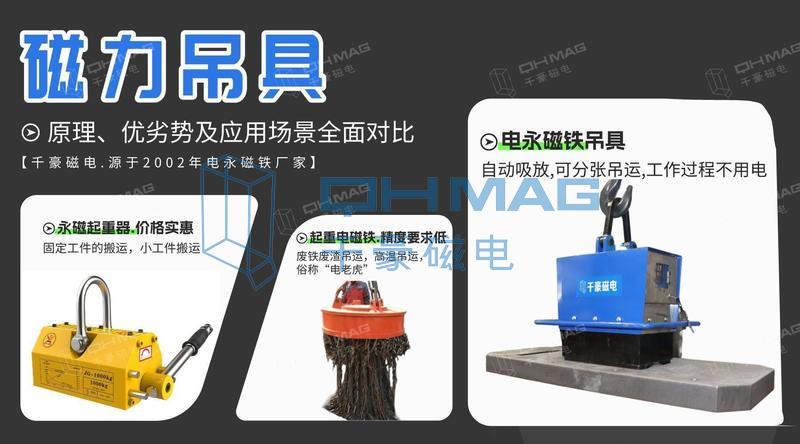
1. Permanent Magnet Lifter: The "Mover" of Natural Magnetic Fields
-
Principle : Relying on high-performance permanent magnets such as neodymium iron boron to generate a magnetic field, the system uses a mechanical handle to rotate the magnetic core, thereby reversing the magnetic pole direction for attraction and release. No external power supply is required, ensuring a consistently stable magnetic field.
-
Features : Safe and energy-efficient, but the magnetic force is not adjustable, making it suitable for short-distance handling of workpieces with fixed specifications.
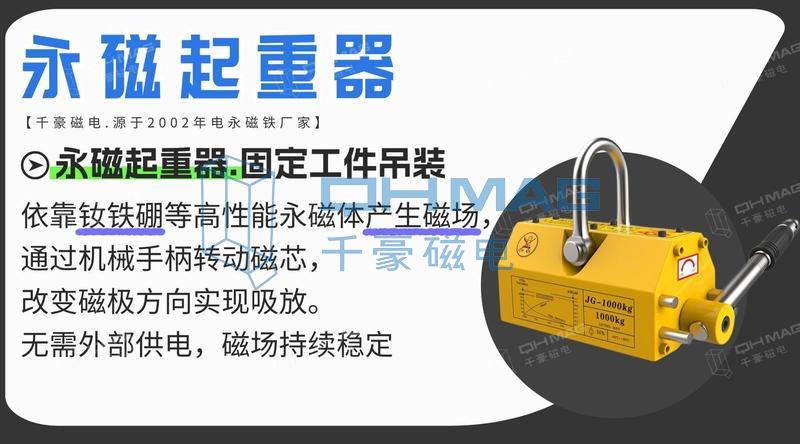
2. Lifting Electromagnet: The "Temporary Magnetic King" of Electric Current
-
Principle When power is applied, the coil generates a magnetic field, but the magnetic force disappears once the power is cut off. Continuous electricity is required to maintain the attraction, and the strength of the magnetic force can be adjusted by varying the current.
-
Features : It offers flexible operation, but consumes high power, generates significant heat, and carries the risk of demagnetization during power outages, resulting in lower safety levels.
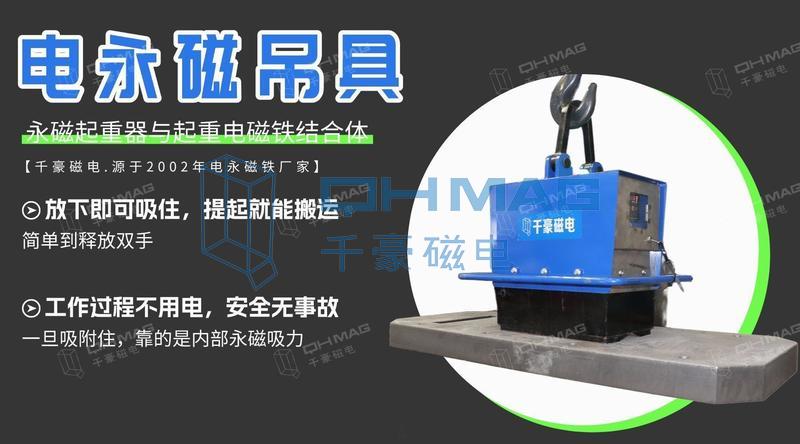
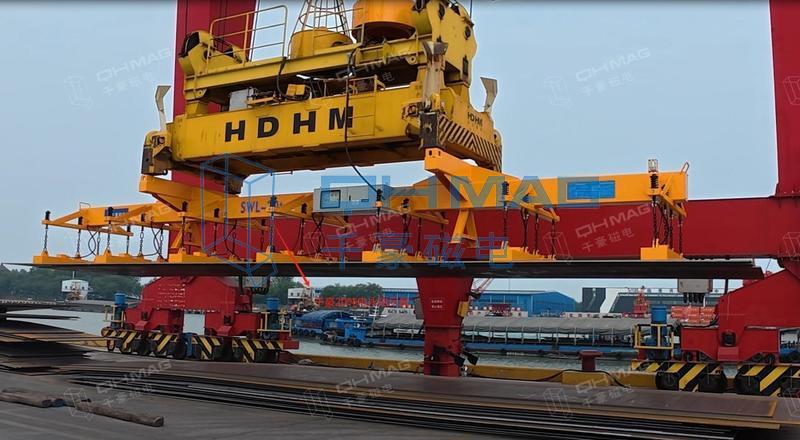
3. Electromagnetic Permanent Lifting Magnets: The "Permanent Magnet + Electromagnet" combination Absolutely unbeatable pairing ”
-
Principle : By combining a permanent magnet with an electromagnetic coil, power is applied only during the magnetization and demagnetization processes, while at all other times the magnetic force is maintained solely by the permanent magnet. The magnetic strength is adjustable, and the magnet retains its magnetism even when power is cut off.
-
Features : 95% energy savings, high safety factor (3x safety margin), ideal for frequent, heavy-lift operations.
II. Strengths vs. Weaknesses: Who Truly Is the "King of Cost-Effectiveness"?
| Comparison Dimensions |
Permanent Magnet Lifter |
Lifting Electromagnet |
Electro-permanent lifting magnet |
| Energy consumption |
Zero energy consumption (mechanical operation only) |
High energy consumption (continuous power supply) |
Ultra-low energy consumption (only energized momentarily) |
| Security |
High (non-magnetic when power is off) |
Low (magnetism lost upon power failure) |
Extremely high (retains magnetism even after power is cut) |
| Magnetic Adjustment |
Non-adjustable |
Adjustable (Current Control) |
Adjustable (Current + Permanent Magnet Combination) |
| Maintenance costs |
Low (no electronic components) |
High (coil prone to aging) |
Extremely low (no moving parts) |
| Applicable Scenarios |
Low-frequency, fixed-specification lifting |
Frequent opening and closing, handling of thin plates |
High-frequency, large-tonnage, irregularly shaped workpieces |
Conclusion :
-
Permanent Magnet Lifter : Suitable for small machinery plants and short-distance fixed operations.
-
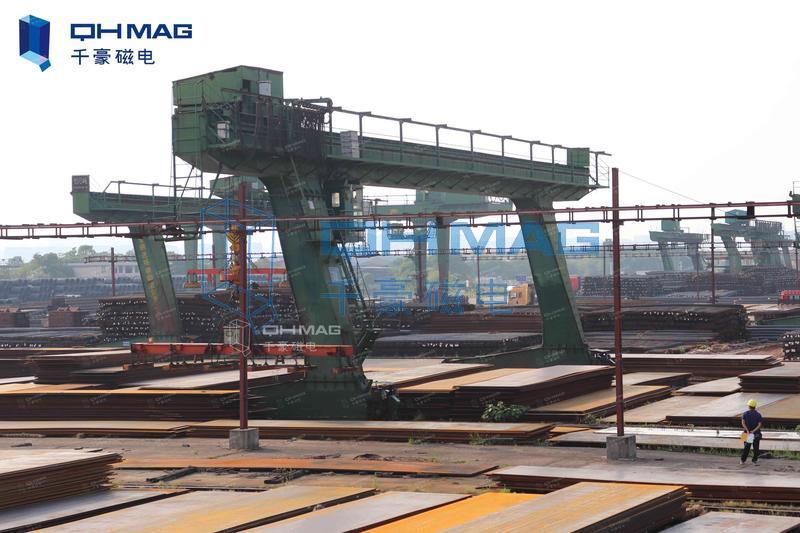
Lifting Electromagnet : Suitable for scenarios such as steel and shipbuilding, it can handle complex operating conditions, including high-temperature environments up to 650°C.
-
Electro-permanent lifting magnet : It comprehensively outperforms the other two, making it especially suitable for high-frequency, heavy-load scenarios such as steel and shipbuilding, as well as automotive manufacturing.
Conclusion :
In the era of Industry 4.0, electro-permanent lifting magnets are no longer a "nice-to-have"—they've become an "essential." Leveraging technological innovation and real-world success stories, Qianhao Magnetic Electric is redefining the future of industrial lifting operations. If your factory is still relying on traditional magnetic lifting tools, now might be the time to consider upgrading—after all, the savings on electricity costs and the boost in efficiency translate directly into hard cash!
Recommended News
Share


Contact Us
Hunan Yueyang Liandong U Valley Industrial Park

WeChat Official Account
Friendly Links:
Copyright © Hunan Qianhao Electrical And Mechanical Technology Co., Ltd.
This site supports IPv4 IPv6 .